Friday, July 26, 2019

Those Confounding Confucius Institutes


Sydney University’s descent into a very dark ignorance

Part Two:
Those Confounding Confucius Institutes

“Over 400 Chinese government-backed Confucius Institutes are making an insidious attempt to restrict academic freedom by silencing debate on human rights and other sensitive issues, and whitewash its atrocious human rights records in Tibet and China”.
The University of Sydney’s wilful abandonment of all past wisdom, love and truth, etc., in its grand project of utter folly, ‘Unlearn’, was the subject matter of Part One:
https://www.academia.edu/34776797/Sydney_University_s_descent_into_a_very_dark_ignorance That University has, as do many others, a Confucius Institute. It is not ‘Turning Japanese’, as the song goes, but Turning Chinese – and being dictated to by a crazy, authoritarian Beijing.
This is all quite fitting, of course, as part of its reckless descent into a dark, slavish ignorance.
Confucius Institute threatens academic freedom and free speech. It is controlled by the Chinese Government, and a central part of its soft power plan to improve the global view of China’s authoritarian system. Confucius Institutes aim to censor and silence discussions on important political and human rights issues like Tibet, East Turkestan, Taiwan, Falun Gong and Tiananmen Square.


What are Confucius Institutes?
Confucius Institutes are educational programs backed by China’s Ministry of Education partnerships in educational institutions outside China. Their stated aim is to promote Chinese language and culture in our schools and universities.
What is the threat of the Confucius Institutes?
Chinese government censorship and propaganda on topics such as Tibet, Taiwan and Tiananmen are reaching our students in high schools and universities all over the world.
The truth about the Confucius Institutes is that they are China’s soft power push inside our schools.
Over 400 Chinese government-backed Confucius Institutes are making an insidious attempt to restrict academic freedom by silencing debate on human rights and other sensitive issues, and whitewash its atrocious human rights records in Tibet and China.
What can I do?
Students, academics, parents, politicians and people of conscience around the around the world have already spoken up. Join them and take action: Say No to China’s Confucius Institutes! ….
And Alexander Dukalskis has written tellingly on the Confucius Institutes:
In recent years, China has fostered academic links with Western universities by funding Confucius Institutes and sending its students to study abroad.
As the recent uproar over the decision of Cambridge University Press to censor a list of journal articles for the Chinese market has highlighted, it also exerts growing influence in academic publishing. Alexander Dukalskis (University College Dublin) argues that the so-called ‘1% argument’ for censorship is disingenuous, and Confucius Institute activity should be strictly restricted to language instruction. Students and academics must be able to scrutinise China freely.
….
The Chinese Communist Party’s (CCP) real and potential influence over higher education outside its borders came to the public’s attention last month when The Economist featured CCP “sharp power” influence – including in higher education – on its cover. Its briefing article drew its terminology from a report by the US-based National Endowment for Democracy. The Woodrow Wilson Center published a detailed report about the CCP’s effort to curry political influence abroad, including in academia. Observers are increasingly paying attention to CCP influence in areas of publishing, student exchange, classroom instruction, and research.
I have a special interest in these topics as the author of a book and academic articles about how authoritarian governments control public discourse domestically. The CCP’s export of some of these practices is concerning. I purposely use the descriptor “CCP” because in China the state is subordinate to the party. So when we talk about the Chinese state or Chinese government, what we are really talking about is the CCP.
In August, Cambridge University Press (CUP) acceded to a request by China’s import agency to censor a list of articles from its journal China Quarterly. CUP initially complied until an open letter by the editor of the journal caught the attention of academics and journalists, who then led an outcry on social media. CUP eventually agreed to not pre-emptively censor its articles, but many were startled by how quickly and easily such a prestigious press agreed to censor on behalf of an authoritarian government.
The rationale, of course, is that CUP and other presses like it wish to protect access to the Chinese market. They argue that if they censor a small portion of their offerings, then the vast majority can be accessed in China, thereby salvaging links between foreign and Chinese academics. This is the 1% argument: only 1% is censored but 99% can be accessed, so really this is not such a big problem.
This is disingenuous, for two reasons. First, it ignores that censorship is even more insidious and powerful when people do not know they are subject to it. By selectively pruning offerings for the Chinese market, presses lead readers to believe that the post-censorship catalogue represents the full picture of foreign perspectives on China.  Editing out so-called “sensitive” topics like the Tiananmen Square repression of 1989, the Great Leap Forward, the Cultural Revolution, and studies of Tibet, Xinjiang, and Taiwan gives the false impression that the CCP view on these issues is the only legitimate one and that foreign academia agrees.
Second, the 1% argument obscures the likely financial motives behind such censorship decisions.  In CUP’s case the CCP threatened to halt the press’ best-selling English language curriculum.  SpringerNature now not only censors some of its offerings in the journals International Politics and the Journal of Chinese Political Science but has also signed a letter of intent with the People’s Publishing House apparently to publish propagandistic works by CCP leader Xi Jinping.
It is difficult to avoid the conclusion that financial motives play a major role in these sorts of decisions.
Of course publishing is not the only higher education target of the CCP. Hundreds of thousands of Chinese students study abroad each year, which is a source of funds for universities in the West. In my admittedly anecdotal and limited experience, these students are most often a joy to work with because they are smart, curious and have interesting perspectives.
However, they are also subject to surveillance and mobilisation by the officially-sponsored Chinese Students and Scholars Association (CSSA). Western universities have been mostly silent about the CSSA, which is understandable. The CSSA presents itself as a means of helping Chinese students settle in abroad, so university leaders may feel there is little they can do.  However, some troubling examples suggest that it also plays a more assertive role in policing public discourse. This includes instances of policing what lecturers say in the classroom.
Indeed, one function of the CCP’s strategy to control public discourse about China in foreign universities is precisely to influence classroom instruction. Hundreds of Confucius Institutes teach Chinese language and culture at Western universities and schools.
Confucius Institutes present themselves as politically innocuous, but it does not take long for instruction in Chinese “culture” to morph into China “studies”, with all the off-limits topics that this implies for the CCP. It is worth remembering that the parent institution of Confucius Institutes is Hanban, which is a department of the Chinese Ministry of Education, itself ultimately under the purview of the CCP’s Central Propaganda Department. Indeed, high-level CCP officials have often been quite blunt about the Confucius Institutes being a part of the party’s foreign propaganda effort.
Here again, part of the motivation for welcoming Confucius Institutes on campus in the first place is financial. Typically Confucius Institutes come with financial subsidies from Hanban (and thus ultimately the CCP). Additionally, university administrators may see the prospect of tighter links with the CCP as facilitating the recruitment of fee-paying Chinese students.  The upshot is that universities outsource their Chinese language instruction while Confucius Institute officials sometimes get a seat at the table in discussions about the curriculum in which those language or culture offerings are embedded.
The CCP also attempts to sway the tenor of research about China. Projects like the Institute for China-America Studies or the CCP-linked endowed professorship in China Studies at Johns Hopkins University are prominent examples. The overall aim is to influence the way that China is researched, discussed, and presented.
Ultimately, what is to be done? First, leaders of universities and publishing houses need to firmly and publicly stand up for academic freedom. They should say early, often and publicly that the university places free inquiry at the centre of its engagement with China. If this offends CCP partners, then so be it.
Second, universities should re-evaluate their relationships with Confucius Institutes, particularly given the CCP’s more aggressive turn under Xi Jinping. Confucius Institute contracts sometimes have clauses that call for re-evaluation every so often and universities should take advantage of these opportunities. Ideally, universities would use such clauses to terminate their relationships with CIs and CI-affiliated “research” institutes. 
Short of that, they could press for terms relating to academic freedom to be included and for the activities of CIs to be strictly restricted to language instruction.
Third, individual academics should consider boycotting peer review and submission for presses that censor their catalogues for the Chinese market. Publishing houses rely on the mostly free labour of academics to generate their products. Scholars therefore have some leverage to influence the situation. In a petition that is still open, more than 1,000 have already signed up to boycott reviewing for publications that censor their content for the CCP.
It is incumbent on university leaders, publishing houses, individual academics, and the general public to preserve free inquiry when it comes to China. This is of pressing importance because as a rising economic and military power, China will only play a more important role in the world. It is up to all of us to ensure that this role can be scrutinised freely and fairly. ….

Thursday, July 4, 2019

‘Handbag’ carriers from Göbekli Tepe to Mexico


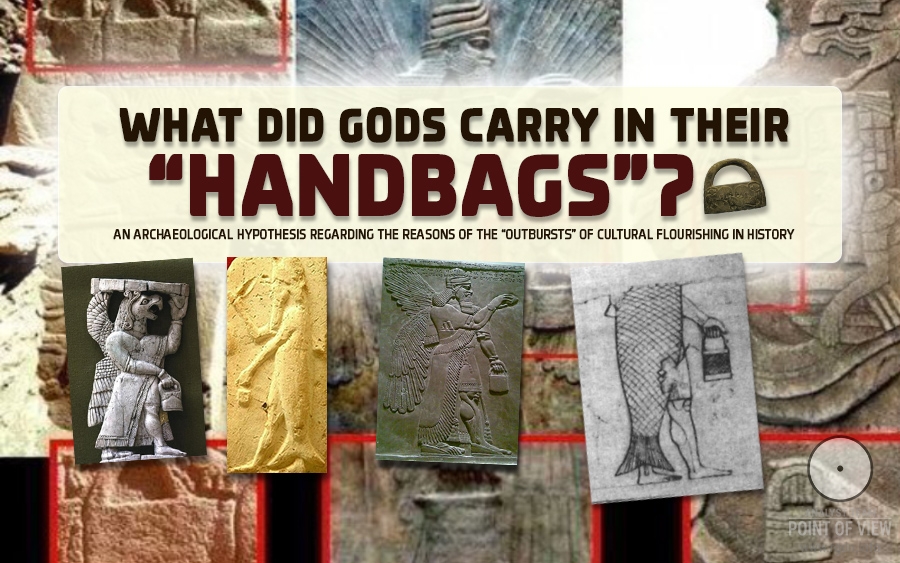
What did Gods carry in their “handbags”?
 
 by
 
Damien F. Mackey


“I add “Assyrian Apkallu” to the search parameters and even more images flood my screen. Often they show bearded men holding bags or buckets which closely resemble those depicted on the Göbekli Tepe pillar and the one held by the Mexican “Man in Serpent” figure”.
 
Graham Hancock


Knowing that Graham Hancock is never dull reading, and also that his recent (2015) book, Magicians of the Gods: The Forgotten Wisdom of Earth's Lost Civilisation, has quite a lot to say about Göbekli Tepe, a site whose findings I think are devastating for the evolutionary explanation of origins:
 
Göbekli Tepe dating plain wrong
 
 
then it was inevitable that I should, when I saw the book in a library, take it home to read.
A few things struck me early. Most especially, those ubiquitous ‘handbags’ of the gods.
What did they mean?
That question has been posed, too, by dmatherly at the colourful Graham Hancock site
 

What function do ancient depictions of so-called hand bags have?...From the Olmec to Sumerian/Assyrian and even on a stela at Gobekli Tepe are these found..
 
 
Graham Hancock himself, when in situ at Göbekli Tepe, had speculated about these objects.
He writes about it in his book:
 
While I’m online I run some searches for images of the Seven Sages. I don’t get many hits at first, but the moment I change the search terms to “Apkallu” and “Seven Apkallu” I open a colossal archive of images from all over the internet, many of them reliefs from Assyria, a culture that thrived in Mesopotamia from approximately 2500 BC to about 600 BC. I add “Assyrian Apkallu” to the search parameters and even more images flood my screen. Often they show bearded men holding bags or buckets which closely resemble those depicted on the Göbekli Tepe pillar and the one held by the Mexican “Man in Serpent” figure. It’s not just the curved handles of these containers, or their shape—where the resemblance is much closer than on the original Oannes relief I reproduced in Fingerprints of the Gods. Even more striking is the peculiar and distinctive way that the figures from both Mesopotamia and Mexico hold these containers with the fingers of the hands turned inward and the thumb crooked forward over the handle.
There’s something else as well. A good number of the images show not a man but a therianthrope —a birdman with a hooked beak exactly like the hooked beak of the therianthrope on the Göbekli Tepe pillar. What makes the resemblance even closer is that in the Mesopotamian reliefs the birdman is holding the container in one hand and a cone-shaped object in the other. The shape is a little different but a comparison with the disc cradled above the wing of the Göbekli Tepe birdman is hard to resist.
I can’t prove anything yet. It could, of course, all be coincidence, or I could be imagining links that aren’t there. But my curiosity is aroused by the similar containers on different continents and in different epochs and so I jot down a series of questions that can form the frame of a loose hypothesis for future testing. For instance, could these containers (whether they are bags or buckets) be the symbols of office of an initiatic brotherhood—far traveled and deeply ancient, with roots reaching back into the remotest prehistory? I feel that this possibility, extraordinary though it may seem on the face of things, is worth looking into and is strengthened by the distinctive hand postures. Might these not have served the same sort of function as Masonic handshakes today—providing an instant means of identifying who is an “insider” and who is not?
 
[End of quote]
 
Striking cultural, architectural, and many other similarities amongst cultures spread as far and wide as Mesopotamia, Armenia (modern Turkey), Africa and the New World (e.g. Mexico), and significantly differing as to their eras, do not favour the evolutionary view of origins in isolation. How to explain this Göbekli Tepe–Australian Aboriginal connection, for instance?:
 

Also grabbing my attention in Hancock’s book were the ancient references to the Flood by Nebuchednezzar I and Ashurbanipal, especially given my identification of both of these names with Nebuchednezzar ‘the Great’ (so-called II) - three name for the one king. See e.g. my article:
 
Nebuchednezzar - mad, bad, then great
 
 
From these ancient quotes we learn that (also not favouring the evolutionary view) there was “the flood”, despite Mesopotamia often experiencing floods; that a “seed [was] preserved” from this flood, and that “writings” existed before the flood. Hancock writes:
 
In due course, later kings would speak of their link to the antediluvian world. In the late first millenium BC, Nebuchadnezzar I of Babylon described himself as a “seed preserved from before the flood”88 while Ashurbanipal, who ruled the central Mesopotamian empire of Assyria in the seventh century BC, boasted: “I learned the craft of Adapa, the sage, which is the secret knowledge … I am well acquainted with the signs of heaven and earth … I am enjoying the writings on stones from before the flood.”89


Sunday, June 16, 2019

Beware of Greeks boasting inventions


by


Damien F. Mackey


“Thereupon one of the [Egyptian] priests, who was of a very great age, said: O Solon, Solon, you Hellenes are never anything but children, and there is not an old man among you.

Solon in return asked him what he meant. I mean to say, he replied, that in mind you are all young; there is no old opinion handed down among you by ancient tradition,

nor any science which is hoary with age”.


Plato’s Timaeus


The view of the ancient Egyptian priest – {who would proceed to recount to Solon the legend of Atlantis} - that the Greeks (“Hellenes”) were not at the forefront of all culture and science, is quite different from that of a Greek taxi driver I once encountered according to whom the Greeks were the inventors of practically everything: cities; philosophy; mathematics; logic; sculpture; and so on.


The celebrated encounter between the Egyptian priest and the wise Athenian statesman, Solon, as narrated in Plato’s Timaeus, could not really have happened - {though it was loosely based on real history} - because Solon himself was (Plato also) an invention of the Greeks. For the wise Solon read the wise Solomon, who was in fact an ancient Israelite king, a Jew, his name being a very by-word for wisdom.

King Solomon certainly had his dealings with Egypt. In fact the Bible loses interest in the great man at about the very point at which he is said to have engaged in horse-trading with Egypt (I Kings 10:28). It is then that secular history takes over, with Solomon morphing into Senenmut (Senmut), a famous guest of female Hatshepsut’s in Egypt’s Eighteenth Dynasty. According to one of Senenmut’s statues: ‘I was in this land under [her] command since the occurrence of the death of [her] predecessor'. See e.g. my article:


Solomon and Sheba


The presumed laws of Solon have been identified by Edwin M. Yamauchi as being, at least in part, late Jewish (era of Nehemiah): “Two reformers compared - Solon of Athens and Nehemiah of Jerusalem” (The Bible World, 1980, pp. 269-292).


In “Solomon and Sheba” I wrote this of Greek, now architectural, appropriation:       


Much has been attributed to the Greeks that did not belong to them - e.g. Breasted … made the point that Hatshepsut's marvellous temple structure was a witness to the fact that the Egyptians had developed architectural styles for which the later Greeks would be credited as originators. Given the Greeks' tendency to distort history, or to appropriate inventions, one would not expect to find in Solon a perfect, mirror-image of King Solomon.

[End of quote]


Well before all of this, back in the time of the mighty Akkadian king Naram-Sin (c. 2200 BC, conventional dating), artists were already ‘out-Greeking’ the Greeks. M. Van de Mieroop writes this of a piece of sculpture at the time (A History of the Ancient Near East ca. 3000 – 323 BC, Blackwell, 2004, p. 66. Emphasis added):


Sculpture in the round now showed enormous refinement. The copper Bassetki statue (bearing the text regarding Naram-Sin’s deification), for example, shows great naruralism in the representation of the human body. It presents a technological breakthrough, too, as it was made with the lost wax technique, a technique long credited to the classical Greeks.


[End of quote]


Long before even that, at the site of Göbelki Tepe (c. 12,000 BC, conventional dating), cultural and artistic innovations apparently long anticipated the Greeks:


The presence of art in the buildings, the substantial effort that must have been involved in making and erecting them, and a lack of evidence for any permanent settlement in the area, led Schmidt and others to conclude that Göbekli must have been a sacred place where pilgrims traveled to worship, much like the Greek ruins of Delphi or Olympia. If that interpretation is true it would make the buildings, which date back more than 10,000 years to the early Neolithic, the oldest temples ever found.


“For Schmidt, Göbekli Tepe was primarily a sacred site. Its built environment was a nondomestic communal space within a geography of Stone Age pilgrimage, like a Greek amphictyony for hunter-gatherers”.


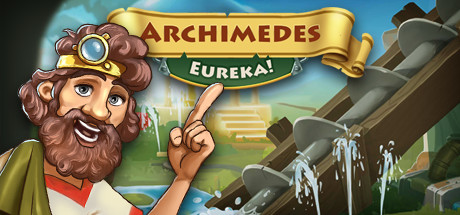
Finally, we have found previously that the supposed C3rd BC Greek mathematician, Archimedes, has been accredited with an invention that the neo-Assyrians were already using centuries before that time: the screw pump.

Thus I wrote in:


Sobna (Shebna) the High Priest


Dr. Stephanie Dalley of Oxford University’s Oriental Institute and author of the fascinating book, The Mystery of the Hanging Garden of Babylon, has explained that the ancients commonly confused Sennacherib of Nineveh with Nebuchednezzar of Babylon.


And she has expertly argued that the famed ‘Hanging Gardens’ of antiquity were situated in Nineveh, and not in Babylon. Moreover, Dr. Dalley has been able to demonstrate (actually in situ) that the screw pump, famously attributed to Archimedes (C3rd BC), was already being used by the Assyrians about half a millennium earlier, at the time of Sennacherib.


Friday, June 7, 2019

Until which “coming” would Apostle John live?


Image result for the apocalypse of john


Beyond the “Second Coming”
 

Part Two:
Until which “coming” would Apostle John live?


by
 
Damien F. Mackey


“Peter turned and saw that the disciple whom Jesus loved was following them.
(This was the one who had leaned back against Jesus at the supper and had said,
‘Lord, who is going to betray you?’)
When Peter saw him, he asked, ‘Lord, what about him?’
Jesus answered, ‘If I want him to remain alive until I return,
what is that to you? You must follow me’.”
 
John 21:20-22


The Apostles of Jesus Christ were the types who were never going ‘to die wondering’.
Philip, for instance (John 14:8): ‘Master, show us the Father; then we shall be content’.
And Thomas (20:25): ‘Unless I see the nail marks in his hands and put my finger where the nails were, and put my hand into his side, I will not believe’.
Now Peter: ‘Lord, what about him [John]?’
 
Jesus often met such questions with a mild rebuke.
In the case of Philip (John 14:9-11):
 
‘Have I been with you so long, and yet you have not known Me, Philip? He who has seen Me has seen the Father; so how can you say, ‘Show us the Father’? Do you not believe that I am in the Father, and the Father in Me? The words that I speak to you I do not speak on My own authority; but the Father who dwells in Me does the works. Believe Me that I am in the Father and the Father in Me, or else believe Me for the sake of the works themselves’.
 
In the case of ‘Doubting Thomas’ (20:27): ‘Put your finger here; see my hands. Reach out your hand and put it into my side. Stop doubting and believe’.
In the case of Peter: ‘What is that to you?’, etc.
 
But there may now arise a modern question: If, as most Christians seem to believe, Jesus has not yet come as He spoke of to his disciples - {and as they (e.g. Sts. John, Paul) wrote of with phrases like “soon”, or even “very soon”} - in what Christians term (wrongly, I think) the “second coming”, then how is it that the risen Jesus can say that He wanted John ‘to remain alive until I return’?
This statement, by the way, is perfectly in accord with what the pre-Resurrection Jesus had told his followers (Matthew 16:28): ‘Truly I tell you, some who are standing here will not taste death until they see the Son of Man coming in His kingdom’.
Apparently, while Peter was not going to be one of these, John was.
Had Jesus Christ, who had risen from the dead by his own power, by the power of his Father (John 10:17-18): ‘The reason my Father loves me is that I lay down my life—only to take it up again. No one takes it from me, but I lay it down of my own accord. I have authority to lay it down and authority to take it up again. This command I received from my Father’, all of a sudden, despite his now being in a higher (transformed) state of being, become confused about when He would actually come again?
No, the fact is that there was a “coming” before the final coming, as I estimated in Part One: https://www.academia.edu/29837194/Beyond_the_Second_Coming_ thus:
 
As the Americans say, Let’s do the math.
 
First: “In the Gospel the Lord shows us that His first coming was in humility, as a Servant, to free the world from sin”. http://www.ewtn.com.au/devotionals/mercy/coming.htm
 
Second: His soon-to-take-place “coming” as gleaned from the quotes above, follows that one. And it is this particular “coming” that I would designate the “Second Coming”.
 
Last: There is yet to be a Final Coming, as indicated by the Catechism: “God's triumph over the revolt of evil will take the form of the last judgment after the final cosmic upheaval of this passing world” (No. 667). The Last Judgment.
 
Peter’s lifetime approximated to only the First of these.
John would live on until the Second.
We still await the Final coming of Jesus Christ.

Monday, June 3, 2019

‘There shall come a Star out of Jacob’


 Image result for star out of jacob
 
 
The Law, we are told by St. Paul, has “a shadow of the good things to come”
(Hebrews 10:1). The various ordinances and feasts of the Old Testament,
if properly understood, are found, according to G. Mackinlay, “to refer to
and foreshadow many events and doctrines of the New Testament”.


Previously I have written (summarising Lieutenant-Colonel G. Mackinlay’s important book, The Magi: How They Recognised Christ's Star, Hodder and Stoughton, 1897):
 
….
Chapter Three: “A Star … out of Jacob”
 
Let us now turn again to the method of inferences from harmonies, that we have used in the last two chapters, in order to determine, with greater precision than has been attained do far, the date of Our Lord’s Nativity. Despite Scaliger, who said that God alone, not man, can determine the true day of the Nativity (Scaliger, as quoted by Hales, Chron., Vol. 1, p. 199), we are prepared to accept a result arising clearly and consistently from the method of harmonies – should such a result be achieved – provided, of course, that the result does not clash with, or contradict, any well–established fact of history. And we can look upon this further application of the method of inferences from harmonies as being a further test of the reliability of this method of inference.
We shall investigate historical methods later on.
 
Mackey’s comment: Actually the needed revision of late BC-early AD history, not yet effected, may be far more radical than earlier writers, like Mackinlay, could possibly have imagined. As Mackinlay saw it, it was universally accepted that Our Lord’s Nativity could not have been earlier than the beginning of BC 10, or later than the end of BC 5. The date is today generally given as being somewhere between BC 8-4.
But see my radical revision of all of this:
 
A New Timetable for the Nativity of Jesus Christ
 
 
“Chronologists have never really managed to sort out a satisfactory biblical timeline for this Roman scenario, with the Nativity currently having to be positioned in BC time (8 BC, 4 BC) to accommodate a faulty Herodian chronology.
But it is Jesus Christ the Lord of History, the Alpha and the Omega (the Aleph and the Tau), and not king Herod, who determines the end point of BC time and the beginning of AD (Anno Domini) time”.
 
In pursuing these new inferences now for the earlier part of Our Lord’s life, we once again follow our reliable guide Mackinlay who commences by establishing “the greater probability” of the following two facts:
 
(a) That the Nativity of Our Lord was at least five months after the beginning of a period of shining of the morning star, and,
(b) That the Nativity was at a Feast of Tabernacles (p. 140).
 
Firstly, we investigate Mackinlay’s reason for believing that our Lord’s Nativity was:
 
(a) Five months after a period of shining.
To begin with, we must consider what reason there is for supposing that the morning star was shining at all when Our Lord was born. In Malachi 3:1 … St. John the Baptist is referred to under the figure of the morning star, as the forerunner of the Christ. But the morning star itself may be called “My messenger who shall prepare the way before Me”. It is not unusual for inanimate objects thus to be spoken of in Scripture, for instance in Psalm 88:38 we have “the faithful witness in the sky”, and in Psalm 148:3 the sun, moon and stars of light are exhorted to praise God. Consequently, as Mackinlay has explained it (p. 141), “we can reasonably suppose that the Morning Star was shining at the Nativity”. Furthermore, he adds, if the morning star were the herald of the coming One, it is fitting to imagine that a somewhat prolonged notice should be given; for “it would be more dignified and stately for the one to precede the other by a considerable interval, than that both should come almost together”.
We shall find Mackinlay’s supposition of a prolonged heralding by the morning star borne out by the following inference. According to the principle of metaphors being taken from things present, we could infer that the morning star was actually shining when Our Lord (in Matthew 11:10), quoting Malachi 3:1, spoke of the Baptist as “My messenger … before My face”. Consistently following the same line of thought, we may reasonably infer that the morning star was also shining more than thirty years earlier when Zechariah quoted the same scriptural verse – i.e. Malachi 3:1 – at the circumcision of his son, John (Luke 1:76).
Even had this appropriate passage not been quoted at the time, Mackinlay suggests (p. 142), “we might have inferred that the herald in the sky would harmoniously have been shining at the birth of the human herald”.
Mackinlay further suggests from his inference that both Our Lord and St. John were born when the morning star was shining, that “both must have been born during the same period of its shining”. [He shows this in his charts]. The Annunciation to Mary was made by the angel Gabriel in the sixth month after the announcement to Zechariah (Luke1:13, 24, 26); and so it follows that the Baptist was born five to six months before Our Lord. Since Mackinlay’s charts indicate that the periods of shining are separated from each other by intervals of time greater than six months, then both Our Lord and his herald must have been born during the same period of shining.
Consequently Our Lord was born at least five months after the beginning of a period of shining of the morning star. ….
 
(b) At a Feast of Tabernacles
The Law, we are told by St. Paul, has “a shadow of the good things to come” (Hebrews 10:1). The various ordinances and feasts of the Old Testament, if properly understood, are found, according to Mackinlay, “to refer to and foreshadow many events and doctrines of the New Testament” (p. 143). Again, A. Gordon remarks that: “Many speak slightingly of the types, but they are as accurate as mathematics; they fix the sequence of events in redemption as rigidly as the order of sunrise and noontide is fixed in the heavens” (The Ministry of the Spirit, p. 28).
The deductions drawn from Gospel harmonies attest the truth of his statement.
We have already observed that the Sabbath Year began at the Feast of Tabernacles; the great feasts of Passover and Weeks following in due course. Our Lord’s death took place at the Passover (Matthew 27:50), probably, Mackinlay believes, “at the very hour when the paschal lambs were killed”.
“Our Passover … has been sacrificed, even Christ” (1 Corinthians 5:7); the great Victim foretold during so many ages by the yearly shedding of blood at that feast. The first Passover at the Exodus was held on the anniversary of the day when the promise – accompanied by sacrifice – was given to Abraham, that his seed would inherit the land of Canaan (Exodus12:41; Genesis 15:8-18).
Our Lord rose from the dead on the day after the Sabbath after the Passover (John 20:1); the day on which the sheaf of first fruits, promise of the future harvest, was waved before God (Leviticus 23:10, 11). Hence we are told by St. Paul that as “Christ the first-fruits” (1 Corinthians 15:20. 23) rose, so those who believe in him will also rise afterwards. This day was the anniversary of Israel’s crossing through the Red Sea or “Sea of Reeds’ (Exodus 12-14), and, as in the case of the Passover, it was also a date memorable in early history, being the day when the Ark came to rest on the mountains of Ararat (Genesis 8:4). The month Nisan, which had been the seventh month, became the first at the Exodus (Exodus 12:2). Thus Our Lord’s Resurrection was heralded by two most beautiful and fitting types, occurring almost – possibly exactly – on the same day of the year; by the renewed earth emerging from the waters of the Flood, and by the redeemed people emerging from the waters of the “Sea of Reeds”.
The next great event of the Christian dispensation, the Descent of the Holy Spirit (Acts 2:1, 2), occurred at the Feast of Weeks – or Harvest – or Pentecost (Leviticus23:15, 16). It was during this season that the Law had been given to Moses on Mount Sinai (Exodus 19:1, 10, 11). It is noteworthy, therefore, that the inauguration of the New Covenant took place on the anniversary of the establishment of the Old Covenant; showing that the dispensation of Law was superseded by that of the Holy Spirit (Hebrews 8:7; 2 Corinthians 3:6).
Accordingly, “since there is such manifest deign in the timing of Our Lord’s Death and Resurrection and of the descent of the Holy Spirit”, Mackinlay suggests that “the Nativity may well have occurred at the remaining great Feast of the Lord – at that of Tabernacles, which began the Sabbath Year” (p. 145). Having said this, Mackinlay proceeds to search for any harmonies that there may be between the characteristics of this Feast of Tabernacles and the events recorded in connection with the Nativity. As we have noticed previously, he says (p. 146), there were two great characteristics of the Feast of Tabernacles: 1. Great joy and 2. Living in booths (tents).
 
1. Great joy.
The Israelites were told at this feast, “You shall rejoice before the Lord your God” (Leviticus23:40), and “You shall rejoice in your feast … you shall be altogether joyful” (Deuteronomy16:14, 15). King Solomon dedicated his Temple on a Feast of Tabernacles, and the people afterwards were sent away “joyful and glad of heart” (1 Kings 8:2, 66; 2 Chronicles7:10).
There was no public rejoicing at the Nativity of Our Lord, however; on the contrary, as Mackinlay notes, “shortly afterwards Herod was troubled and all Jerusalem with him” (Matthew 2:3)”. But though Our Lord was rejected by the majority, we find the characteristic joy of Tabernacles reflected in the expectant and spiritually-minded souls. Before the Nativity both the Virgin Mary and Elizabeth rejoiced in anticipation of it (Luke 1:38, 42, 44, 46, 47). At the Nativity an angel appeared to the shepherds and brought them good tidings of great joy; and then “suddenly there was with the angel a multitude of the heavenly host praising God, and saying, ‘Glory to God in the highest’.” The shepherds then came to the infant Saviour and returned “glorifying and praising God” (Luke 2:9-20).
Forty days after the Nativity, at the Purification, Simeon, who had been waiting a long time for the consolation of Israel, and the venerable Anna who was a constant worshipper, joined in with their notes of praise and gladness (Luke 2:22-38).
And lastly the wise men from the East “rejoiced with exceeding great joy” when they saw the star indicating where the Saviour was, and they came into the house, saw the young Child with his Mother, and presented the gifts that they had brought (Matthew 2:9-11).
 
2. Living in Booths.
The command given to the Israelites concerning the observance of the Feast of Tabernacles was: “You shall dwell in booths for seven days” (Leviticus23:42). We also read, “In the feast of the seventh month … all the congregation … made booths, and dwelt in the booths” (Nehemiah8:14, 17).
According to Mackinlay (pp. 147-148), the living in booths finds a parallel in the language of the Apostle John, when he wrote concerning the Birth of Our Lord, “The Word became flesh, and tabernacled among us” (John 1:14); and Our Lord himself used a somewhat similar figure when he spoke of his body thus “Destroy this Temple, and in three days I shall raise it up” (John 2:19) – words misunderstood by his enemies and afterwards quoted against him (Matthew 26:61; 27:40).
It was at the Feast of Tabernacles that the glory of God filled the Temple that King Solomon had prepared for Him (2 Chronicles 5:3, 13, 14), and it would seem to have been at the beginning or first day of the feast, the fifteenth day of the month.
Consequently, in Mackinlay’s opinion (p. 148) “it would appear to be harmonious that the Advent of the Lord Jesus in the body divinely prepared for him (Hebrews 10:5) should also take place at the same feast and most suitably on the first day of its celebration”.
It will be noticed that the glory of God did not cover the tent of meeting when the Israelites were in the wilderness, and did not fill the tabernacle, at the Feast of Tabernacles. But it did so on the first day of the first month of the second year after the departure from Egypt (Exodus 40:17, 34, 35). We must remember that there was no Feast of Tabernacles in the wilderness, nor was the Sabbath Year kept at this stage; but both of these ordinances were to be observed when the Israelites entered into the Promised Land (Exodus 34:22). No agricultural operations were carried out during the forty years of wandering in the wilderness.
As the Feast of Tabernacles inaugurated the Sabbath Year, Mackinlay judged (p. 149) that the glory of God filled the temple on the first day of the feast, “as that would be in harmony with what happened in the tabernacle in the wilderness when the glory of the Lord filled it on the first day of the only style of year then observed”. A. Edersheim, writing about the Feast of Tabernacles, says (The Temple, note on p. 272): “It is remarkable how many allusions to this feast occur in the writings of the prophets, as if its types were the goal of all their desires”.
 
Mackey’s comment: What follows next, whilst serving as a guide, cannot be taken in strict numerical terms, I would think, given the present feeble state of biblico-historical reckoning, preventing us from archaeoastronomical retrocalculations.
 
Having come thus far, we are able - within Mackinlay’s context - to arrive at a still tentative, but very reasonable, conclusion: and this conclusion will later be strengthened very greatly, particularly when we look at the historical facts. Mackinlay at this stage analyses those years, BC 10-5, which are universally accepted as being the only possible ones for the date of Our Lord’s birth, to determine which of them fits the best (p. 150). Since it has been inferred that the Nativity occurred at a Feast of Tabernacles – probably on the first day – and that the morning star had been shining by then for at least five months, a glance at Mackinlay’s chart informs us that the only year within the possible historical limits that satisfies these conditions, in his context, is BC 8.
For we will notice that at the Feast of Tabernacles – say the autumnal equinox – of:
 
BC 10, the morning star was only just beginning its period.
BC 9, there was no morning star at all.
BC 8, the conditions are satisfied completely.
BC 7, there was no morning star at all.
BC 6, there was no morning star at all.
BC 5, the morning star had been shining only for about four months previously.
 
According to Mackinlay, the Feast of Tabernacles, BC 8, presents the further harmony that it was specially suited to the occasion, “as it was the first after a Sabbath year, and consequently a specially joyful one”. Thus, he says (pp. 150-151), even if we neglect the consideration of the Morning Star, we still have the Feast of Tabernacles BC 8 indicated for the date of the Nativity by the method of Gospel harmonies with the Sabbath year”.
….